I was a big fan of the D7000 and the D600 was my 2012 DSLR of the Year, so when I got the news that D7100 was coming out I was very excited. When I heard it went the way of the D800E and it shipped without a low pass filter then I got even more excited. I was hoping this was going to be the usable resolution equivalent to the D800E, but it’s not. Don’t get me wrong, this is a good camera with excellent image detail. However, it’s not going to dethrone the D600 as my favorite Nikon camera.
For this test I got to spend some time with a D7100 using the AF-S 24-70mm f/2.8G ED lens as the kit lens version was unavailable. Ergonomically it feels about identical to the D600 which is a good thing as that’s an excellent camera to use on a daily basis. Since the D7100 is NOT a full-frame camera it doesn’t suffer from the same compact AF point selection area as the D600 so that’s actually one thing that makes the D7100 better than the D600. The other thing that is in the favor of the D7100 is the fact that it’s about $800 cheaper (as of this writing) than the D600, so it’s a great value choice as well.
Overall I loved the ergonomics of the camera body and it’s vast number of external buttons all within reach (and many are programmable). The rear LCD is supposed to be higher resolution than the D600 (1,229,000 dots vs – 921,000 both 3.2”), but it sure didn’t feel like it. The new info button comes in handy as well for learning more information about the vast features in the menu of this camera.
Overall, it’s a great body that think anyone would enjoy – especially after you get used to the features / quirks of the Nikon system.

I suck at shooting birds, but the D7100 doesn’t!
f/2.8 @ 70 mm, 1/1250,ISO 2000
One area where the D7100 really seemed to excel was in its Auto Focus performance. Simply put, it’s outstanding – one of the best that I’ve tested – and a lot easier to use than the D4 system. In fact I quickly got so used to how good it was that I found myself trying to find a way to make it fail, and it handled most tasks that I threw at it without any issue.
I’m a horrible bird shooter so when I coincidentally ran into a big group of birds I just upped my shutter speed in M(annual) and put the D7100 to the test. Even in AF-S mode it was nailing everything I threw at it. In AF-C it did a great job of not getting confused when obstructions approached like in the shot below (which honestly would trip my 1D Mark IV up):

This is scary good AF! I was looking the opposite direction when I heard something.
I turned, shot the frames and this bird was gone. It even didn’t get tripped up by the branches!
f/2.8 @ 62 mm, 1/2000,ISO 100
If you shoot sports or moving objects like birds, cars, etc… then you will REALLY enjoy the AF system on this camera. It’s by far the easiest system I’ve used and it gives my 1D X a run for its money. I can also say with confidence that the D7100 AF system performed significantly better than the D4 that I tested. I wasn’t expecting this when I was out testing this camera, but if I was a D4 owner I’d be demanding that Nikon put this mojo in a D4 firmware upgrade or in a new D4s.
The frames per second is useless unless you shoot JPEG only with fast SD card’s, but if given a choice I’d rather accurate AF than FPS any day.
The full set of images is available at http://www.ronmartinsen.com/nikon/d7100, but here’s a few noteworthy images. Click the image for the original and view using the gallery to see EXIF information. All major settings were camera defaults except Active D Lighting was set to Auto. I was using Auto ISO (full range) and typically AF-S with a single point on my intended subject.

I have lots of examples where the shadow detail like this is excellent
f/2.8 @ 24 mm, 1/125,ISO 100, No Flash, AWB (Warm)

Not bad, but the X20 shot of the same scene was just about as good!
f/4 @ 70 mm, 1/1250,ISO 100, No Flash

Curious about dynamic range? This pretty much exercises the whole gamut!
f/5.6 @ 38 mm, 1/200,ISO 800, No Flash, Shade WB

Curious about bokeh or depth of field? Here’s a start.
f/4.5 @ 28 mm, 1/400 (Windy),ISO 800, No Flash, AWB (Warm)

This is hard to appreciate small, but a letter size print of this has wonderful detail
f/6.3 @ 40 mm, 1/200,ISO 800, No Flash

I was happy with the in-camera color as a starting point in this shot
f/4 @ 27 mm, 1/500,ISO 100, No Flash, AWB (Warm)

f/2.8 @ 28 mm, 1/400,ISO 100, No Flash, AWB (Warm)
Good light? Gorgeous results

Really bad light? Still pretty darn good results!
f/2.8 @ 27 mm, 1/1250,ISO 100, No Flash, AWB (Warm)

I had to shoot –1 EV, and ended up with very nice reds here!
f/4 @ 70 mm, 1/320,ISO 100, No Flash

One of the many examples where the AF system
just did the right thing like it was reading my mind
f/2.8 @ 70 mm, 1/125,ISO 125, No Flash

Another example of excellent shadow detail, pleasing bokeh and neutral colors
f/4 @ 62 mm, 1/400,ISO 100, No Flash

The dynamic range is so good here that it feels exactly like it felt in real life
f/4.5 @ 24 mm, 1/125,ISO 110, No Flash

This is one of those impossible shots you know won’t work, but you take anyway.
I was actually pleased with how well it captured the scene.
f/6.3 @ 60 mm, 1/250,ISO 100, No Flash
It’s my opinion that real world shots really tell you what you want to know about a camera and keep you from being surprised when you get it home. It does mean that I have to take some criticism for shots that aren’t always cropped perfectly (what you see is EXACTLY what came out of the camera), and I show image failures. However, my goal is to be the place that you can trust for a REAL assessment of a camera and a place you can trust.
NOTE: Even though I had the lens set to the 24mm mark, all shots report as 26mm in this article.

f/2.8 @ 26 mm, 1s, ISO 200,No Flash
Excellent dynamic range is obvious – I was very impressed right out of the camera. Despite supporting ISO 100, I felt ISO 200 gave the best image quality. The overall best shot I got was at the 24-70’s sweet spot of 35mm @ f/5.6 and ISO 200:

f/5.6 @ 35 mm, 4s, ISO 200, No Flash
That, boys and girls, is goonie goo goo good! The resolution here rivals what I saw with my D800 and D600 testing, but I didn’t have an EXACT comparison so I will not show it here. I can certainly say that in terms of image quality, this is up there with the best of the best. This camera has insane amounts of resolution that you’ll only appreciate on your computer as the camera LCD (despite all of its megapixels) just doesn’t do it justice.

f/10 @ 26 mm, 1/13,ISO 25600
If you had to shoot in the higher ISO’s you’ll be a lot better off turning off the in-camera noise reduction and usingNoiseware to clean your image up. The higher ISO creates so much noise that Nikon’s noise reduction destroys the detail.

D7100, f/8 @ 26 mm, 15s, ISO 100,No Flash, HDR High (in-camera HDR)
Mouse over to see non-HDR and mouse out to see in-camera HDR version
I was very satisfied with the HDR mode, but terribly disappointed with the fact that you only get a JPEG result of the HDR series. On my 5D Mark III I can still do HDR while shooting in RAW and all the intermediate files are kept so it makes it fun to use HDR to see what the camera will get, but you still have the real RAW files forPhotomatix or HDR Efex Pro 2. With the D7100 that is NOT the case, so people who are serious about HDR are going to have to either decide to go JPEG only and except the file the camera gives you OR ignore this feature and just shoot bracketed shots with RAW files (recommended).
With that disclaimer out of the way, I was very impressed with the in-camera results. Except for the HDR High* setting (example), all of the other settings seemed very realistic / natural feeling. What’s more, the Auto setting did a great job but is conservative to avoid that overdone HDR feeling. I can see this being a useful feature for casual consumer shooting when RAW files aren’t going to be needed or desired (rare).
For the price, this is a very nice camera for Nikon shooters – especially those who are interested in staying in theDX Format family. For bird hunters on a budget, I’d highly recommend it for the AF performance but the frames per second are going to drive you insane. Nikon advertises 6 fps, but that is only if you are shooting JPEG only I think as RAW felt like about 3 fps.
This camera didn’t capture my instant love like the D7000 or the D600 did, and I’m not sure why. Perhaps I’m just getting numb from the very good cameras I’ve been testing lately. I thought I might love this one so much that I’d get one, but I find myself being happy with the cameras I already own. I still highly recommend this camera for existing Nikon owners looking to upgrade (including D700 and D300s owners), and I think most will be very satisfied with its performance.
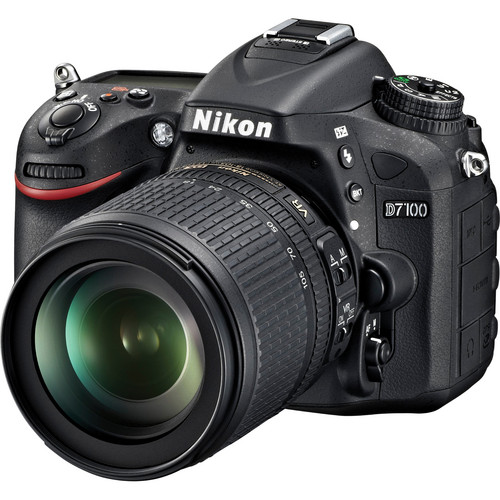
For this test I got to spend some time with a D7100 using the AF-S 24-70mm f/2.8G ED lens as the kit lens version was unavailable. Ergonomically it feels about identical to the D600 which is a good thing as that’s an excellent camera to use on a daily basis. Since the D7100 is NOT a full-frame camera it doesn’t suffer from the same compact AF point selection area as the D600 so that’s actually one thing that makes the D7100 better than the D600. The other thing that is in the favor of the D7100 is the fact that it’s about $800 cheaper (as of this writing) than the D600, so it’s a great value choice as well.
Overall I loved the ergonomics of the camera body and it’s vast number of external buttons all within reach (and many are programmable). The rear LCD is supposed to be higher resolution than the D600 (1,229,000 dots vs – 921,000 both 3.2”), but it sure didn’t feel like it. The new info button comes in handy as well for learning more information about the vast features in the menu of this camera.
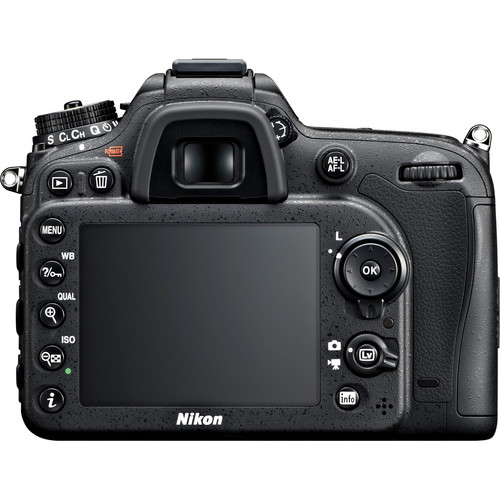
Overall, it’s a great body that think anyone would enjoy – especially after you get used to the features / quirks of the Nikon system.
Auto Focus Performance

I suck at shooting birds, but the D7100 doesn’t!
f/2.8 @ 70 mm, 1/1250,ISO 2000
I’m a horrible bird shooter so when I coincidentally ran into a big group of birds I just upped my shutter speed in M(annual) and put the D7100 to the test. Even in AF-S mode it was nailing everything I threw at it. In AF-C it did a great job of not getting confused when obstructions approached like in the shot below (which honestly would trip my 1D Mark IV up):

This is scary good AF! I was looking the opposite direction when I heard something.
I turned, shot the frames and this bird was gone. It even didn’t get tripped up by the branches!
f/2.8 @ 62 mm, 1/2000,ISO 100
The frames per second is useless unless you shoot JPEG only with fast SD card’s, but if given a choice I’d rather accurate AF than FPS any day.
Real World Sample Images
As always, these images ALL RIGHTS RESERVED (yes, even the lame ones <g>). You may not save, edit, print, redistribute or otherwise use them without expressed written permission.The full set of images is available at http://www.ronmartinsen.com/nikon/d7100, but here’s a few noteworthy images. Click the image for the original and view using the gallery to see EXIF information. All major settings were camera defaults except Active D Lighting was set to Auto. I was using Auto ISO (full range) and typically AF-S with a single point on my intended subject.

I have lots of examples where the shadow detail like this is excellent
f/2.8 @ 24 mm, 1/125,ISO 100, No Flash, AWB (Warm)

Not bad, but the X20 shot of the same scene was just about as good!
f/4 @ 70 mm, 1/1250,ISO 100, No Flash

Curious about dynamic range? This pretty much exercises the whole gamut!
f/5.6 @ 38 mm, 1/200,ISO 800, No Flash, Shade WB

Curious about bokeh or depth of field? Here’s a start.
f/4.5 @ 28 mm, 1/400 (Windy),ISO 800, No Flash, AWB (Warm)

This is hard to appreciate small, but a letter size print of this has wonderful detail
f/6.3 @ 40 mm, 1/200,ISO 800, No Flash

I was happy with the in-camera color as a starting point in this shot
f/4 @ 27 mm, 1/500,ISO 100, No Flash, AWB (Warm)
f/2.8 @ 28 mm, 1/400,ISO 100, No Flash, AWB (Warm)
Good light? Gorgeous results

Really bad light? Still pretty darn good results!
f/2.8 @ 27 mm, 1/1250,ISO 100, No Flash, AWB (Warm)

I had to shoot –1 EV, and ended up with very nice reds here!
f/4 @ 70 mm, 1/320,ISO 100, No Flash

One of the many examples where the AF system
just did the right thing like it was reading my mind
f/2.8 @ 70 mm, 1/125,ISO 125, No Flash

Another example of excellent shadow detail, pleasing bokeh and neutral colors
f/4 @ 62 mm, 1/400,ISO 100, No Flash

The dynamic range is so good here that it feels exactly like it felt in real life
f/4.5 @ 24 mm, 1/125,ISO 110, No Flash

This is one of those impossible shots you know won’t work, but you take anyway.
I was actually pleased with how well it captured the scene.
f/6.3 @ 60 mm, 1/250,ISO 100, No Flash
About Real World Sample Images
I sometimes am asked, “what do you mean by ‘real world’ sample images?” Some have even taken a poke and said “does that mean photos that suck?”The truth is that as a consumer one of the things that has always annoyed me is when I see the images from a camera on a web site that look fantastic, but when I get it home and use it under normal everyday conditions the photos just don’t have the same “oomph”. As a blogger I began to investigate “why” there were these discrepancies and I discovered three things:All of the images I feature for all my camera reviews are only impacted by the in-camera processing which is also what you see on your camera’s LCD (even when you shoot RAW). There is NO post-processing and what you see is what you can expect to get. While I do try to get some images in nice settings so you can see what a nice photo will be like, I also work hard to stress the camera to see how it performs under difficult situations (i.e., backlight, mid-day sun highlights, tungsten lighting, indoors with high ISO, etc…).
- Some sites doctor their photos so what you are seeing is an edited image that used the camera in question, but that’s not an image you’ll really ever get out of the camera. To me this is useless.
- Some sites only show you photos taken in beautiful surroundings and lighting conditions. While these may be real images, they aren’t the type of image the average person will be taking. This leads to massive disappointment when you get home and are shooting around the house in very difficult lighting and non-ideal locations and think “gosh, this camera sucks compared to what I saw on the web”.
It’s my opinion that real world shots really tell you what you want to know about a camera and keep you from being surprised when you get it home. It does mean that I have to take some criticism for shots that aren’t always cropped perfectly (what you see is EXACTLY what came out of the camera), and I show image failures. However, my goal is to be the place that you can trust for a REAL assessment of a camera and a place you can trust.
Video
I didn’t test video on this camera, so I have no comment.Bookshelf Test
Bookshelf tests are conduction on a tripod with mirror lockup and camera default settings. I did turn D-lighting on and these are the actual in-camera JPEG’s (Fine) with no external modifications.NOTE: Even though I had the lens set to the 24mm mark, all shots report as 26mm in this article.
f/2.8 @ 26 mm, 1s, ISO 200,No Flash

f/5.6 @ 35 mm, 4s, ISO 200, No Flash

f/10 @ 26 mm, 1/13,ISO 25600
High ISO Performance
The high ISO performance that Nikon’s are legendary for just isn’t there with this camera, so I put it in the same camp as the D800 where you should try to avoid ISO’s above 3200 when possible. The High ISO modes (12,800 and up) are nasty useless to me.If you had to shoot in the higher ISO’s you’ll be a lot better off turning off the in-camera noise reduction and usingNoiseware to clean your image up. The higher ISO creates so much noise that Nikon’s noise reduction destroys the detail.

HDR Mode

D7100, f/8 @ 26 mm, 15s, ISO 100,No Flash, HDR High (in-camera HDR)
Mouse over to see non-HDR and mouse out to see in-camera HDR version
With that disclaimer out of the way, I was very impressed with the in-camera results. Except for the HDR High* setting (example), all of the other settings seemed very realistic / natural feeling. What’s more, the Auto setting did a great job but is conservative to avoid that overdone HDR feeling. I can see this being a useful feature for casual consumer shooting when RAW files aren’t going to be needed or desired (rare).
Conclusion
This is a very good camera. It’s a worthy successor to the D7000 which it not only surpasses but literally obliterates in terms of overall image quality. While the in-camera noise levels are pretty good, I still feel like I prefer the higher ISO noise handling of the last generation of Nikon cameras. It just seems that Nikon pushed the megapixels so far on this camera that it followed the same pattern as the D800 where more resolution equals more noise.For the price, this is a very nice camera for Nikon shooters – especially those who are interested in staying in theDX Format family. For bird hunters on a budget, I’d highly recommend it for the AF performance but the frames per second are going to drive you insane. Nikon advertises 6 fps, but that is only if you are shooting JPEG only I think as RAW felt like about 3 fps.
This camera didn’t capture my instant love like the D7000 or the D600 did, and I’m not sure why. Perhaps I’m just getting numb from the very good cameras I’ve been testing lately. I thought I might love this one so much that I’d get one, but I find myself being happy with the cameras I already own. I still highly recommend this camera for existing Nikon owners looking to upgrade (including D700 and D300s owners), and I think most will be very satisfied with its performance.
Where to order
Click here to order the Nikon D7100 on the B&H web site. Adorama may also still have some bodies (only) in stock here.Other articles you may enjoy
If you enjoyed this article, you may also enjoy these reviews:- Canon 6D
- Nikon D4
- Nikon D600 (vs Canon 5DM3 & 6D)
- Nikon D7000 & 24-120mm Lens
- Nikon D800
- COMPARISON: Nikon D600 vs Canon 5D Mark III using the latest 24-70 f/2.8 lenses
- Which camera should I buy?
- How do I get my kid to look at the darn camera?
- Things You Need AFTER You Buy Your New Camera - Must Have Photography Accessories
- Which Printer Should I Buy? Epson or Canon?
- Nik Complete Collection by Google now only $149 (save more with discount)
Disclosure
If you make a purchase using links found in this article, I may make a commission. It doesn’t cost you a penny more, but it does help to support future articles like this.
If you enjoyed this article, please support future articles like this by donating a dollar or saving several dollars by using my discount coupon codes. Either way, your support is greatly appreciated!











2 comments:
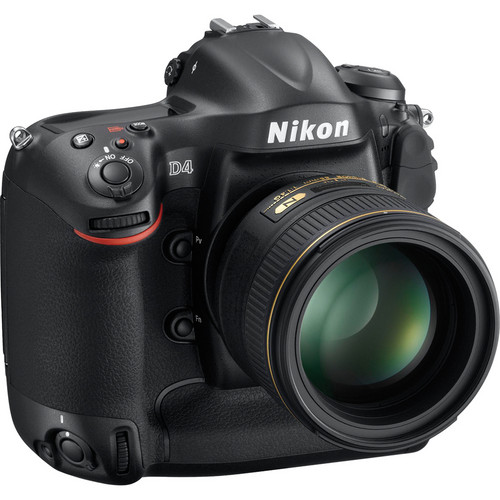
Thanks for reviewing the D4. I am torn in-between the D3s and the D4 and the only reason I have still not bought either one is because I can't make up my mind.
I was very happy when I saw the D4 had way more metering points than the D3(s) or any body before. However, you "struggled" with the metering and more so with white balance... I have read similar things about the D4 elsewhere online.
The only shooting I see myself doing with a "35mm DSLR" is sports, personal projects, macros, wedding, events & gigs (yes also events in nightclubs).
There are certainly some nice things going with the D4 :
1. illuminated buttons
2. 16 megapixels as opposed to 12
3. menu button also in V-grip
The D3s on the other hand is a much more tried and tested beast and quite frankly, 12MP - I don't know how large I can print from it?
Please advise...
Regards,
Ali Zaidi
P.S. I spent a whole night reading your blog... just AMAZING !! Thank you for such in-depth and passionate reviews and education.
Thanks for stopping by and your kind words.
There's no easy answer. While I do think the D3s is the superior camera overall, if you were to buy one today it would be fairly used. You then need to make sure you get a good copy that doesn't have issues with oil getting slung on the sensor.
If you can find a good copy (and there are plenty out there by people who collect expensive gear but rarely utilize it), then I think you'll be very happy with the D3s. Odds are you aren't coming from a D series, so you'd be quite happy with the D4 too. Both are excellent products.
If you have a good lens collection already (i.e., you own at least the 24-70 2.8 and 70-200 f/2.8 VR II) then the D4 gives you peace of mind because it has a factory warranty. If you don't have even those lenses, then I'd say put your money into the lenses and get a D3s - a good copy will not dissapoint you.
At 4256 x 2832 pixels, the D3s will give you about a 12x8" actual size print on an Epson printer (360ppi) or 14x10" actual size print on a Canon printer (300ppi). What's more, it's very easy to scale an image to 4x the actual size these days and get good results as long as you aren't looking at it from an inch away (and you should usually be at least 1x the diagonal length of the print for viewing anyway). This means that a 16x24" print - the max most people would reasonably ever hang in a home - is easily doable with the D3s. I could also easily print from the D3s and D4 using a Canon and Epson and 99% of the people couldn't tell the difference between the D3s print on the Canon and the D4 print on the Epson. So, in a nutshell, printing isn't going to be a problem with either camera.
If you'll be doing a lot of indoor low-light stuff then I think the D3s is going to outperform the D4 for those scenarios. Lens AF performance matters quite a bit for those scenarios too, so it's not just the camera. Don't expect cheap lenses or a 50mm f/1.4 to be magical under those conditions - it's not.
If you enjoy the blog then please share links to your favorite articles on your favorite forums and tell you friends about it. Also look me up on the About page if you decide you want to do private training or a portfolio review.